
Quick Summary
Sudden chimney blockages, severe creosote buildup, and venting failures during cold weather create urgent carbon monoxide and residential fire risks for Rochester homeowners. To safely resolve dangerous flue hazards and structural damage, Premier Chimney Cleaning Greater Rochester provides rapid emergency chimney cleaning services and comprehensive diagnostic inspections throughout Monroe County. Readers will learn how to recognize critical venting emergencies and can call the dedicated local line immediately for fast emergency dispatch or a free written estimate.
Emergency Chimney Cleaning Services in Rochester: Safety and Response Guidance
Safety Warning: If you suspect an active chimney fire, if your carbon monoxide detector sounds, if smoke is substantial or continuing, or if anyone feels ill, evacuate the building immediately and call 911. Stop using the heating appliance immediately and do not attempt to restart it until it has undergone a qualified professional inspection.
A sudden chimney or venting problem during cold weather can create immediate safety hazards, including carbon monoxide exposure and residential fire risks. When venting failures or blockages occur, homeowners should understand appropriate emergency response procedures and consult professional chimney service providers like Premier Chimney Cleaning Greater Rochester to evaluate and resolve the issue safely.[2]
Available research does not provide Rochester-specific incident counts, percentages, heating demand estimates, guaranteed arrival times, standard pricing, or confirmed provider availability. For broad context, National Fire Protection Association (NFPA) data indicates that residential structure fires accounted for 329,500 reported incidents nationwide in 2024, resulting in 2,920 civilian deaths and $11.4 billion in direct property damage. Locally, the West Webster Fire Department logged 1,225 total incidents across all call categories in 2025. Neither source isolates chimney-related incidents or emergency cleaning calls, but both highlight the critical importance of maintaining safe heating and venting systems.[1]
Factors Influencing Chimney and Venting Performance
The following factors represent general heating and venting principles rather than verified local statistical trends, and specific chimney conditions should be evaluated by a qualified professional:
- Cold Flue Draft Resistance: When exterior masonry chimneys are cold, dense air inside the flue can resist upward draft when starting an appliance, potentially pushing smoke and combustion gases backward into living spaces.
- Weather and Moisture Impact: Cold winter weather, moisture exposure, and temperature fluctuations can contribute to masonry deterioration, cracked flue liners, or dislodged debris over time.
- Exterior Obstructions: High winds, snow accumulation, ice, or damaged chimney caps can restrict venting pathways at the top of the stack.
Recognizing a Venting Emergency
Homeowners should stop using their heating appliance and seek professional evaluation if they notice any of the following signs:
- Smoke entering living areas: Exhaust backs up into the room instead of venting upward.
- Carbon monoxide alarms sounding: Combustion gases from a fireplace, wood stove, or heating appliance are failing to vent properly.
- Signs of a chimney fire: Roaring noises, intense localized heat, or falling burning debris.
- Flue blockages: Obstructions from nesting materials, collapsed liner debris, or fallen masonry that prevent exhaust from escaping.
- Structural damage: Visible cracks, shifting, or leaning in the chimney structure.
Immediate Safety Steps for Venting Failures
If you experience a venting problem or suspect a chimney hazard, follow these safety steps:
- Stop using the appliance immediately: Do not add fuel. For gas units, shut off the gas supply valve if it is safe to do so.
- Evacuate if conditions are dangerous: Leave the home immediately if smoke is substantial, if anyone feels ill, or if alarms sound.
- Call 911 for emergencies: Contact emergency services immediately in the event of an active fire, carbon monoxide alarm activation, or continuing smoke.
- Do not attempt hazardous interventions: Do not attempt to fight an active chimney fire yourself.
- Do not restart the appliance: Keep the heating system off until a professional inspection confirms it is safe to use.
Professional Inspection, Cleaning, and Blockage Removal
Need Emergency Chimney Cleaning Services in Rochester?
We’re available now — call for a fast, free estimate.
When contacting a chimney professional regarding an emergency or venting failure, homeowners should ask whether the company offers the specific diagnostic, cleaning, and repair capabilities required for their system.
Blockage Clearing and Flue Evaluation
Obstructions such as animal nests, leaves, or collapsed liner fragments require specialized equipment to clear safely without damaging the flue or spreading soot into the home. Homeowners can ask providers whether they perform internal video camera evaluations to assess flue integrity and locate obstructions.
Draft and Venting Assessment
If smoke or exhaust backs up into the home, a chimney professional from Premier Chimney Cleaning Greater Rochester can help identify underlying causes, such as mechanical damper malfunctions, inadequate draft, or house depressurization from exhaust ventilation, and recommend appropriate corrective measures.
Inspection After a Chimney Fire or Venting Incident
A chimney fire or severe overheating event can cause severe internal damage, including cracked flue tiles, separated liner joints, and heat damage to adjacent building materials. Professional inspection is needed before restarting any appliance after a chimney fire or serious venting problem to verify structural and operational safety.
Chimney Cleaning and Creosote Management
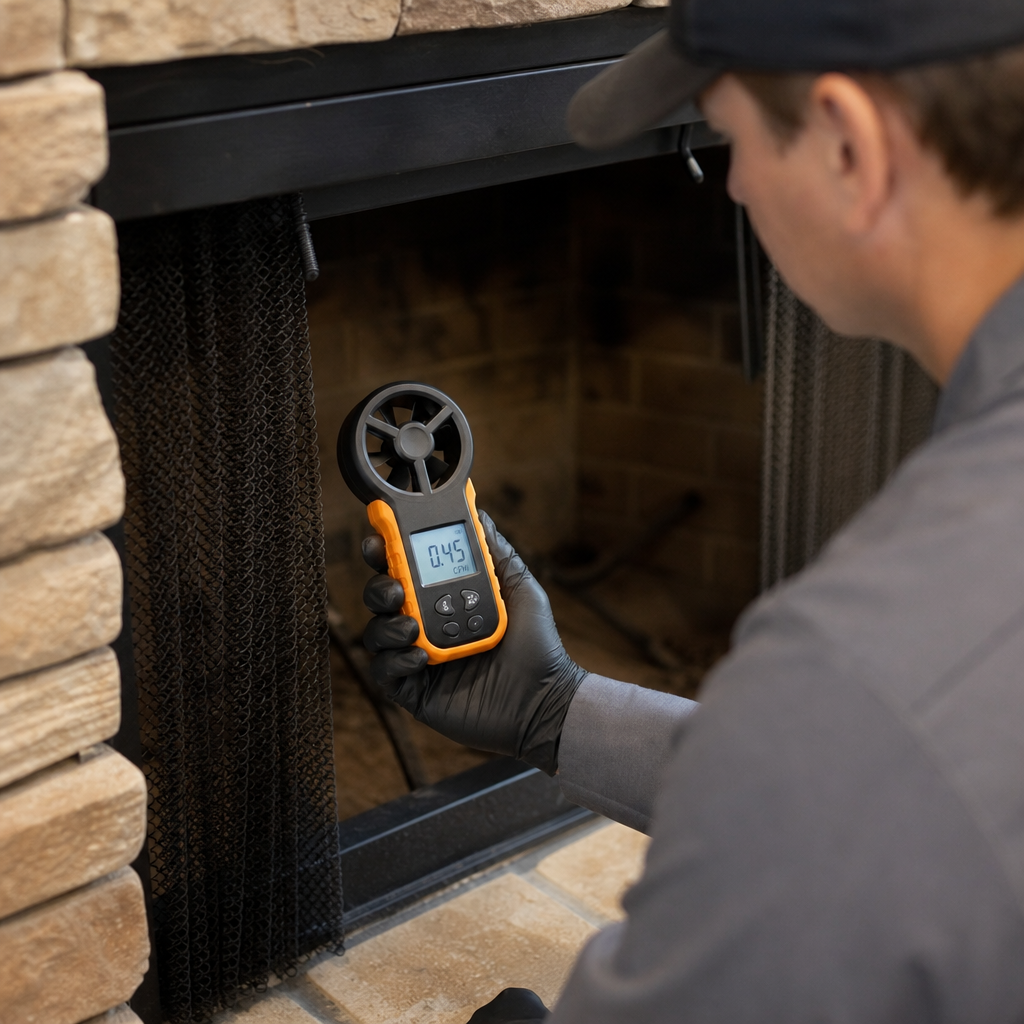
Wood-burning appliances accumulate creosote and soot along the flue walls over time. Heavy or glazed creosote deposits present a combustion risk and require specialized removal methods. A qualified sweep, such as a technician from Premier Chimney Cleaning Greater Rochester, can evaluate the extent of buildup and determine the appropriate mechanical or chemical treatment needed to restore safe venting.
Masonry and Structural Stabilization
Severe weather and aging masonry can lead to exterior chimney damage, loose bricks, or compromised flashing that permits water intrusion. Homeowners should consult qualified masonry or chimney repair specialists to determine what temporary stabilization or permanent repairs are necessary after an evaluation.
Appliance-Specific Venting Considerations
Need Emergency Chimney Cleaning Services in Rochester?
We’re available now — call for a fast, free estimate.
Different heating appliances present distinct venting requirements:
- Wood Stoves and Inserts: Connected flues and stainless steel liners require routine cleaning and inspection tailored to manufacturer specifications to prevent creosote accumulation.
- Gas and Pellet Appliances: Dedicated venting systems, direct vents, and B-vents must remain clear of obstructions and properly sealed to ensure hazardous combustion gases like carbon monoxide vent outside.
Understanding Professional Chimney Inspections
Industry standards outline different levels of chimney inspection depending on the system’s history and current condition:
- Level 1: A visual inspection of readily accessible portions of the chimney exterior, interior, and accessible appliance connections during routine servicing.
- Level 2: A more thorough inspection including accessible attics, crawl spaces, and internal flue surfaces (often using video scanning). A professional inspection of this scope is needed before restarting an appliance after a chimney fire, operational malfunction, or major venting problem.
- Level 3: An advanced evaluation involving the removal of permanent building components when concealed structural damage is suspected.
Emergency Chimney Service Costs
Available research does not provide standardized pricing for emergency chimney services in the Rochester area. Costs vary depending on specific provider rates and the conditions encountered on site. Typical factors influencing overall expense include:[3]
- Timing and Urgency: Calls outside regular business hours or during severe weather events may involve different rate structures.
- Type and Severity of the Problem: Simple soot cleaning differs in scope and equipment from heavy blockage extraction or extensive deposit remediation.
- Accessibility: Chimney height, roof pitch, and access conditions can affect labor requirements and safety measures.
- Required Repairs: Costs will depend on whether service is limited to cleaning and inspection or includes masonry repairs, liner replacement, or component installation.
Homeowners should request an itemized estimate outlining inspection, cleaning, and repair charges before authorizing work.
Service Area and Provider Availability
Service coverage across Monroe County and surrounding Western New York communities (such as Brighton, Greece, Irondequoit, Webster, Fairport, Penfield, Pittsford, Gates, and nearby areas) is provider-specific and must be confirmed directly with individual companies such as Premier Chimney Cleaning Greater Rochester. Response times depend on current technician availability, weather, and road conditions, as guaranteed arrival times are not established in available research.[4]
Frequently Asked Questions
How fast can an emergency chimney sweep arrive in the Rochester area?
Arrival times depend entirely on individual company schedules, technician availability, and road conditions. If you are experiencing an active fire, continuing smoke, or a sounding carbon monoxide detector, evacuate and call 911 immediately rather than waiting for a service technician.
What should I do if smoke starts filling my home from the fireplace?
Stop using the appliance immediately. Evacuate the home if smoke is substantial or if anyone feels unwell, and call 911 if there is active fire or continuing smoke. Do not attempt to restart the appliance until it has been inspected by a qualified professional.
Can I light a fire after a chimney fire if the smoke clears?
No. Even a brief chimney fire can cause hidden structural damage, crack flue liners, or compromise clearances to combustibles. A professional inspection is needed before restarting the appliance.
Why does cold air blow down the chimney when it is not in use?
Cold downdrafts can occur when cold, dense air settles in an exterior flue or when a damper fails to seal properly. A professional chimney technician from Premier Chimney Cleaning Greater Rochester can inspect the damper and recommend appropriate sealing or draft-control options.
How can chimney emergencies be prevented?
Schedule regular professional inspections and cleanings, burn only properly seasoned firewood, keep chimney caps in good repair to exclude debris and wildlife, and install working smoke and carbon monoxide alarms on every level of the home.
Need Emergency Chimney Cleaning Services in Rochester?
We’re available now — call for a fast, free estimate.
Sources
- Statistics – USFA.FEMA.gov – usfa.fema.gov (2024)
- Data Sources and National Estimates Methodology Overview … – usfa.fema.gov (2019)
- Newsroom Press Releases – cpsc.gov
- Fire District – westwebsterfd.org (2026)
Related reading: Chimney Flue Cleaning Cost | Call Now-10% Off | Same-Day Service | Free Estimate
Related reading: Chimney Sweep Cost Rochester Ny | 10% Off & Free Estimate | Same-Day Service
Related reading: Local Chimney Sweep Services – Call Now-10% Off – Same-Day Service – Free Estimate
Frequently Asked Questions
Which surrounding areas near Rochester qualify for same-day emergency chimney cleaning?
Premier Chimney Cleaning Greater Rochester provides rapid emergency dispatch and same-day service across Monroe County, including Greece, Irondequoit, Brighton, Webster, Fairport, Pittsford, and Penfield. Homeowners can call the dedicated local line directly to confirm immediate technician availability and receive a free written estimate.
How is dangerous glazed creosote handled during an emergency chimney cleaning?
Glazed creosote is a hardened, highly combustible tar that standard sweeping brushes cannot clear. Technicians from Premier Chimney Cleaning Greater Rochester utilize specialized mechanical rotary equipment and professional chemical treatments to safely dissolve and remove stubborn buildup without damaging the flue liner.
What specific inspection is needed after a chimney fire or emergency venting failure?
Following any chimney fire or severe venting failure, an NFPA Level 2 inspection is required to inspect internal flue surfaces, attics, and crawlspaces. Premier Chimney Cleaning Greater Rochester performs internal video camera evaluations to identify hidden structural compromises, cracked flue tiles, or compromised joints before it is safe to restart your appliance.
About the author
 |
Sarah Miller Sarah Miller is a home safety specialist and certified chimney sweep with over 8 years of experience in the residential maintenance sector. Holding a BA in Communications from SUNY Brockport, she combines her technical knowledge of creosote removal and fire prevention with clear, actionable advice for homeowners. Her writing focuses on seasonal chimney care and emergency response protocols for Greater Rochester residents. |
Chimney overdue for a cleaning or inspection?
We’re available now — call for a fast, free estimate.
Call Now - Free Estimate