
Last updated July 12, 2026
Seasonal Chimney Cleaning Care for Rochester: Year-Round Homeowner’s Guide
Here’s what most Rochester homeowners get wrong about chimney maintenance: they wait until the first cold snap in October to think about their fireplace, then scramble to find an available sweep while every other household in Monroe County does the same. After 20 years of chimneys, we’ve learned that April—not November—is the most revealing month for a Rochester chimney. After five to six months of steady use followed by weeks of freeze-thaw cycles, the damage that winter hid starts showing itself in your crown, your liner, and your masonry. The homeowners who catch problems in spring save an average of 40–60% compared to those who discover them during a pre-winter emergency call. This guide walks you through exactly what to do with your chimney each season in Rochester’s climate, from the last embers of March through the first frost of October.
Quick Answer
Rochester homeowners should treat chimney care as a four-season cycle: inspect for winter damage in spring, schedule sweeps and repairs during summer’s low-demand window, complete a pre-burning safety check in fall, and monitor for mid-season warning signs through winter. A wood-burning fireplace used five nights weekly needs sweeping every 50–60 fires—typically twice per heating season in Rochester’s climate—while occasional users can maintain annual service.
Table of Contents
- Spring: The Reveal—What Winter Actually Did to Your Chimney
- Summer: The Smart Season to Schedule (That Most People Skip)
- Fall: The Pre-Season Inspection That Prevents Emergencies
- Winter: Mid-Season Monitoring and When to Stop Burning
- How Your Burning Habits Should Change Your Sweep Schedule
- Common Mistakes to Avoid
- When to Call a Professional
- Frequently Asked Questions
Spring: The Reveal—What Winter Actually Did to Your Chimney
April in Rochester is when the truth comes out. After 150+ nights of active burning and three months of freeze-thaw abuse, your chimney has stories to tell—if you know where to look.
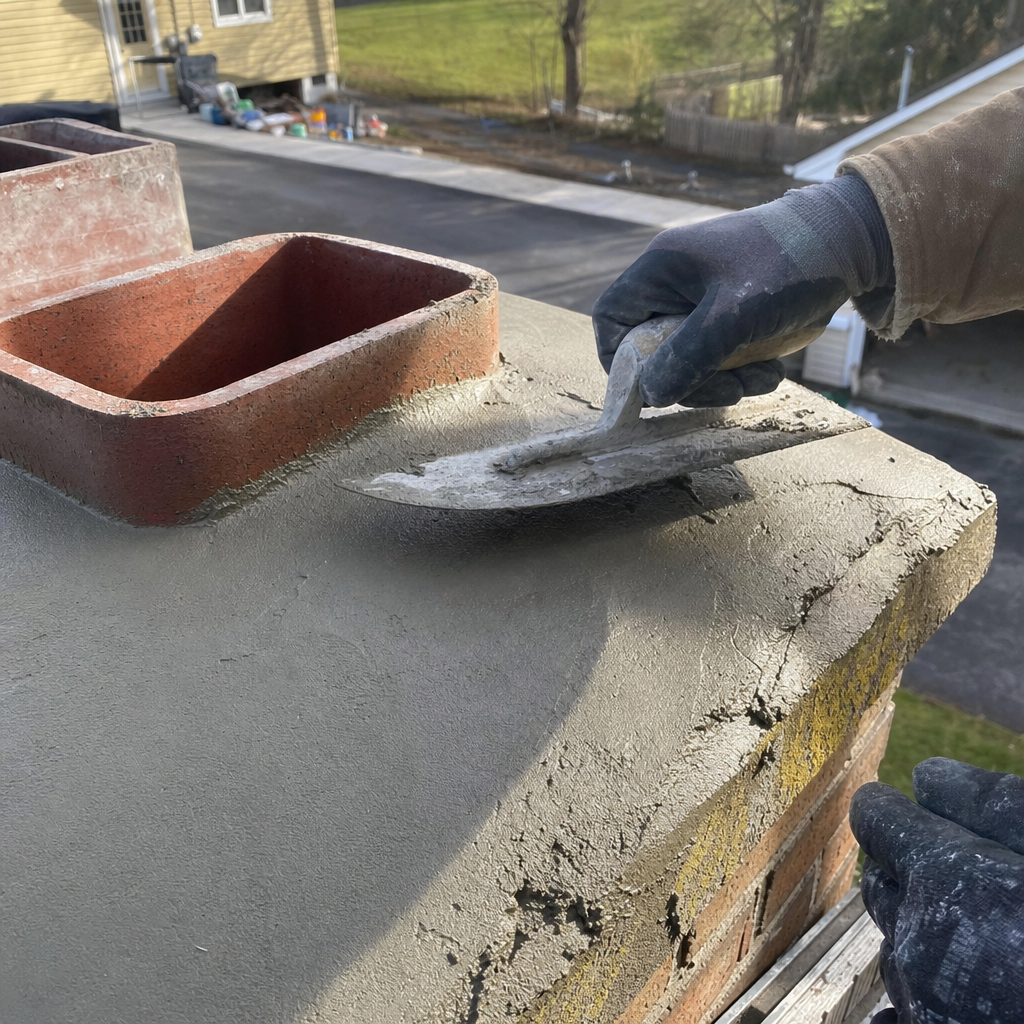
Start with the crown, the concrete slab that caps your masonry chimney. In our experience across Rochester neighborhoods from Park Avenue to Sea Breeze, crown cracking accelerates dramatically during March and April. Water that seeped into hairline fractures in October froze, expanded, and widened those cracks through dozens of cycles. By April, what was a 1/16-inch line is often a 1/4-inch gap that funnels water directly into your flue. We replace more crowns in May than any other month because homeowners finally see what winter accomplished.
Efflorescence—that white, chalky residue on exterior brick—tells a similar story. It’s not just cosmetic. In Rochester’s climate, efflorescence signals that water is moving through your masonry, dissolving salts, and depositing them on the surface. The same water migration that’s pushing out salt crystals is degrading your mortar joints from the inside. In neighborhoods with older housing stock like the South Wedge or Corn Hill, we see this pattern repeatedly in 80–100 year old chimneys that haven’t had their mortar repointed.
Inside the flue, spring reveals liner damage from thermal cycling. Stainless steel liners expand and contract with every fire; after a full Rochester winter, fatigue points develop at joints and elbows. Clay tile liners suffer differently—the repeated heating and cooling creates vertical cracks that channel combustion gases into your chimney walls. Anthony shows up on your job with a video inspection camera, and what we document in April becomes the repair plan that prevents a carbon monoxide issue the following December.
Spring checklist for Rochester homeowners:
- Walk the exterior after the last frost: look for crown cracks, missing mortar, or displaced cap pieces
- Check the attic around the chimney penetration for water stains or musty odors
- Schedule a post-season video inspection—damage is fresh and documented before summer repairs
- Address any repairs now; mortar cures properly in 60–75°F temperatures, which Rochester reliably provides May through September
Summer: The Smart Season to Schedule (That Most People Skip)
July and August are the best months to have chimney work done in Rochester, and they’re the months when our schedule has the most availability. There’s a reason for both facts.
First, demand drops by roughly 60% after Memorial Day. Homeowners stop thinking about their fireplaces. The phones at Premier Chimney Cleaning Greater Rochester quiet down, which means Anthony Perez can dedicate full days to larger projects—liner replacements, crown rebuilds, masonry repointing—without the pressure of emergency calls backing up the schedule. When you book in summer, you’re not competing with a dozen other Rochester households who all discovered smoke backing up into their living room on the same cold Saturday.
Second, materials perform better in warm weather. Mortar for crown repairs and repointing needs consistent temperatures above 50°F for proper curing. HeatShield liner restoration products require specific ambient conditions to achieve their rated bond strength. We’ve done emergency crown repairs in November when a homeowner had no choice, and we’ve done the same work in July when conditions were ideal. The July repairs last longer—full stop.
Summer is also when we recommend scheduling your annual Chimney Cleaning & Sweep in Rochester if you’re a light or moderate user. The creosote from last season has had months to dry and harden, making it easier to remove completely. More importantly, you’re not rushing. You have time to discuss what the inspection reveals, weigh repair options, and schedule follow-up work before you actually need the fireplace.
For Rochester’s lake-effect snow veterans in Greece, Webster, and Hilton: summer is when we install chimney caps with proper spark arrestors and animal guards. The Famco and Gelco caps we use are fabricated with stainless steel mesh that keeps out raccoons, squirrels, and the starlings that nest in Rochester chimneys every spring. Installing in July means you’re not discovering a blocked flue full of nesting material on the first cold night in October.
Fall: The Pre-Season Inspection That Prevents Emergencies
October in Rochester brings a predictable pattern: temperatures drop into the 40s, homeowners light their first fires, and our phones start ringing with emergency calls. The majority of those emergencies were preventable with a proper pre-season inspection.
The one question to ask your sweep before lighting the first fire: “Did you video-scan the entire flue length, and can you show me the footage?” A visual look from the top or bottom isn’t sufficient. We’ve found cracked tiles, detached liner sections, and active water damage that surface inspections missed entirely. At Chimney Repair in Rochester, Anthony Perez performs a full NFPA Level 1 or Level 2 inspection with video documentation on every pre-season check.
Fall inspections in Rochester should specifically address:
- Obstructions: Bird nests, squirrel caches, and leaf debris accumulate from April through September. We’ve pulled five-gallon buckets of material from chimneys that appeared clear from ground level.
- Moisture damage from summer storms: Rochester’s summer thunderstorms drive water past deteriorated flashing and cracked crowns. By October, that moisture has compromised firebrick and damper assemblies.
- Gas fireplace integrity: For Rochester’s many gas insert users, fall is when we test thermocouples, check pilot assemblies, and verify that venting hasn’t been disturbed. Carbon monoxide doesn’t announce itself.
- Clearance to combustibles: In older Rochester homes with modified framing or added insulation, the clearance between chimney components and surrounding structure can shift over years of thermal cycling.
Scheduling your fall inspection by mid-September avoids the October rush and gives time to complete any necessary repairs before the first sustained cold. Nearly 700 homeowners have trusted us with this timing, and the pattern is consistent: the September bookers have warm, safe fireplaces by Halloween. The October callers are often still resolving issues at Thanksgiving.
Winter: Mid-Season Monitoring and When to Stop Burning
Once the heating season is underway in Rochester—typically late October through mid-March—your chimney enters its highest-stress period. The difference between a safe winter and a dangerous one often comes down to recognizing warning signs while the fireplace is in active use.
Stop using your fireplace immediately and call for inspection if you observe:
- Smoke entering your living space at any point during operation—this indicates a blocked flue, failed damper, or negative pressure issue that won’t resolve itself
- Visible flames or glowing material anywhere except the firebox—chimney fires often manifest as unusual sounds (roaring, crackling) or visible flame at the top of the chimney
- A strong, acrid odor that persists beyond the first 10–15 minutes of burning—this suggests active creosote ignition or incomplete combustion
- Carbon monoxide detector activation, even if brief—chimney blockages or liner failures can cause lethal CO backdrafting without visible smoke
- Bricks or mortar fragments in your firebox—spalling masonry indicates advanced freeze-thaw damage that has compromised chimney structure
For Rochester’s heavy burners—those running wood fires five or more nights weekly through January and February—mid-season maintenance is not excessive; it’s necessary. The 50–60 fire interval for sweeping that applies to moderate users compresses to 30–40 fires under intensive use. In a typical Rochester winter with consistent sub-freezing temperatures, that’s a second sweep in January or February.
We see predictable patterns in Rochester’s older neighborhoods. Homes in the 19th Ward, Swillburg, and Browncroft with original masonry chimneys experience more mid-season issues than newer construction because thermal mass and decades of weathering create more stress points. Anthony’s 20 years of pattern recognition means we know what to expect from a 1920s Rochester chimney versus a 1990s build, and we adjust our inspection focus accordingly.
Winter is also when Fireplace Services in Rochester see the most gas fireplace service calls. Pilot light failures, delayed ignition, and burner irregularities peak in January when systems run continuously. We service these with the same diagnostic rigor as wood-burning systems—gas venting failures are equally capable of producing carbon monoxide.
How Your Burning Habits Should Change Your Sweep Schedule
The NFPA 211 standard recommends annual chimney inspection for all solid-fuel appliances, but “annual” doesn’t mean the same thing for every Rochester household. Your actual sweep frequency should track with consumption, fuel quality, and appliance type.
| Usage Pattern | Rochester Heating Season | Recommended Sweep Frequency |
|---|---|---|
| Occasional (1–2 fires/month) | Decorative, holidays only | Annual inspection; sweep every 2–3 years if burning dry hardwood |
| Moderate (1–2 fires/week) | Weekends, cold snaps | Annual sweep and inspection before each season |
| Heavy (5+ nights/week) | Primary or significant supplemental heat | Pre-season sweep + mid-season sweep (January–February) |
| Continuous (daily during season) | Primary heat source | Pre-season sweep; inspection at 40-fire intervals; potential third sweep |
Fuel matters significantly in Rochester’s market. The seasoned hardwood we recommend—oak, maple, beech, dried 18+ months—produces roughly 60% less creosote than unseasoned softwood or construction debris. We still encounter homeowners burning pallet wood or scrap lumber from Rochester’s active manufacturing sector. This material is often treated, painted, or chemically contaminated; it deposits accelerated, sometimes corrosive, residues in your flue.
Appliance efficiency changes the equation too. Modern EPA-certified wood stoves with secondary combustion burn far cleaner than open masonry fireplaces. A Rochester homeowner with a high-efficiency insert might extend their sweep interval slightly, but the inspection remains annual—mechanical components, gaskets, and venting connections still require verification.
For pellet stove users in Rochester’s suburbs: these appliances need specialized cleaning that goes beyond chimney sweeping. The combustion blower, auger system, and heat exchanger tubes require annual service. We handle this as part of our full-service chimney specialist scope, using manufacturer-specified procedures rather than generic approaches.
Common Mistakes to Avoid
- Waiting for “chimney sweep season” in October. By then, every qualified technician in Monroe County is booked two to four weeks out. The smart Rochester homeowner books summer and gets priority scheduling.
- Assuming gas fireplaces don’t need service. Venting blockages, deteriorated connections, and combustion irregularities affect gas systems too. We’ve documented CO hazards in “maintenance-free” gas inserts that hadn’t been inspected in a decade.
- Ignoring the crown because it’s out of sight. Crown failure is the single most expensive deferred maintenance item we encounter. A $400–$800 crown repair in May becomes a $3,000+ rebuild when water has destroyed the top courses of brick and compromised the liner.
- Using the cheapest sweep available. Rochester’s market includes legitimate specialists and itinerant operators with shop vacs and brushes. Without video inspection, proper certification, and insurance verification, you’re not getting a real assessment—we’ve been called to correct dangerous “cleanings” that missed active hazards.
- Burning wet or treated wood to save money. Unseasoned wood from roadside sellers in Ontario County or Livingston County costs less upfront but deposits creosote at 2–3x the rate of properly dried hardwood. The resulting chimney fire risk negates any savings.
- Installing a chimney cap yourself with hardware-store parts. The commodity caps sold at big-box retailers lack proper sizing, mesh specification, and storm collar integration for Rochester’s wind and snow loads. We install Olympia Chimney and Famco caps with proper flue-specific attachment because we’ve replaced too many failed DIY installations.
- Skipping inspection after a chimney fire. Even a “small” chimney fire—one you detected as unusual noise or brief smoke—causes liner damage that compromises safety. We’ve inspected chimneys where homeowners continued using after a fire, unaware that the liner had cracked and was channeling gases into wall cavities.
When to Call a Professional
Certain scenarios demand immediate professional evaluation and are not appropriate for homeowner troubleshooting. Call Premier Chimney Cleaning Greater Rochester at (888) 399-5696 if you experience smoke backup during operation, detect carbon monoxide alarm activation, observe spalling brick or falling mortar, notice water intrusion around your chimney in any season, or if your chimney hasn’t had a professional inspection in over 12 months.
For Rochester homeowners considering property purchases—particularly in historic districts like Corn Hill or the Grove Place Historic District—a Level 2 inspection during the due diligence period is essential. We document chimney condition for real estate transactions with video evidence and written reports that satisfy insurer requirements.
Premier Chimney Cleaning Greater Rochester offers free estimates throughout Rochester and surrounding Monroe County communities. Anthony Perez personally evaluates each project, so the assessment you receive reflects 20 years of direct experience rather than a sales script.
Frequently Asked Questions
A standard chimney sweep and Level 1 inspection in Rochester typically ranges from $200–$350 for a single-flue masonry fireplace, with gas fireplace service running $150–$275 depending on appliance complexity. Factors that increase cost include multiple flues, active creosote buildup requiring rotary cleaning, and accessibility challenges in older Rochester homes with steep roofs. Call (888) 399-5696 for an exact quote—estimates are free and Anthony Perez evaluates each chimney personally.
We perform emergency repairs year-round in Rochester, but certain work is weather-dependent. Crown repairs, masonry repointing, and exterior waterproofing require temperatures above 50°F for proper material curing. Winter repairs focus on safety-critical issues: liner replacement, cap installation, damper repair, and gas venting corrections that can be completed in controlled conditions. If your chimney is unsafe to use, we’ll secure it for winter and schedule comprehensive repairs during the first viable weather window.
For localized damage under 25% of liner length, HeatShield cerfractory resurfacing or sectional stainless repair is typically 40–60% less expensive than full liner replacement. However, if the liner shows multiple failure points, advanced corrosion, or improper original sizing, replacement with a correctly engineered DuraFlex or Olympia Chimney stainless system is the more economical long-term solution. We provide video documentation of the full flue length so you can see exactly what you’re paying for—no guesswork, no upsell.
A functional chimney cap prevents water entry, animal intrusion, and downdraft while allowing proper exhaust flow. In Rochester’s climate, inspect your cap after every major storm: the mesh should be intact without rust-through, the lid should overhang the flue by at least 5 inches, and the storm collar should show no gaps where it meets the flue tile. If you’re missing a cap entirely, or if water, birds, or debris are entering your flue, replacement with a properly sized Gelco or Famco stainless cap is warranted.
Yes, significantly. Deep snow accumulation around the chimney base can block combustion air intake for fireplace systems, causing smoky fires or CO backdrafting. Heavy, wet lake-effect snow also increases moisture loading on masonry and accelerates freeze-thaw degradation of crowns and mortar. We recommend maintaining clear space around chimney bases during heavy snow events and ensuring cap overhang is sufficient to prevent direct snow loading on flue openings.
During peak season (October–March), our emergency response for active safety hazards—smoke backup, suspected chimney fire, or CO detector activation—is typically same-day or next-day in Rochester proper and immediate suburbs. For non-emergency scheduling, summer bookings offer the most flexibility and often next-week availability. Nearly 700 homeowners have trusted our response consistency, reflected in our 4.7-star average across 708 verified reviews.
The Bottom Line
Rochester’s climate demands a year-round approach to chimney care that most generic advice misses. Inspect in April when damage is fresh and visible. Schedule maintenance in July when technicians have time and materials cure properly. Verify safety in September before the first fire. Monitor actively through winter’s heaviest use. Match your sweep frequency to actual consumption, not a calendar abstraction. A chimney isn’t a set-it-and-forget-it appliance—it’s a structural system exposed to 300°F temperature swings, freeze-thaw cycling, and continuous combustion byproducts. Treat it with the seasonal attention Rochester’s weather requires, and it will keep your home warm and safe for decades. Neglect the cycle, and you’ll likely meet us in October under emergency circumstances.
Written by Anthony Perez, Owner & Lead Technician at Premier Chimney Cleaning Greater Rochester, serving Rochester since 2006.