
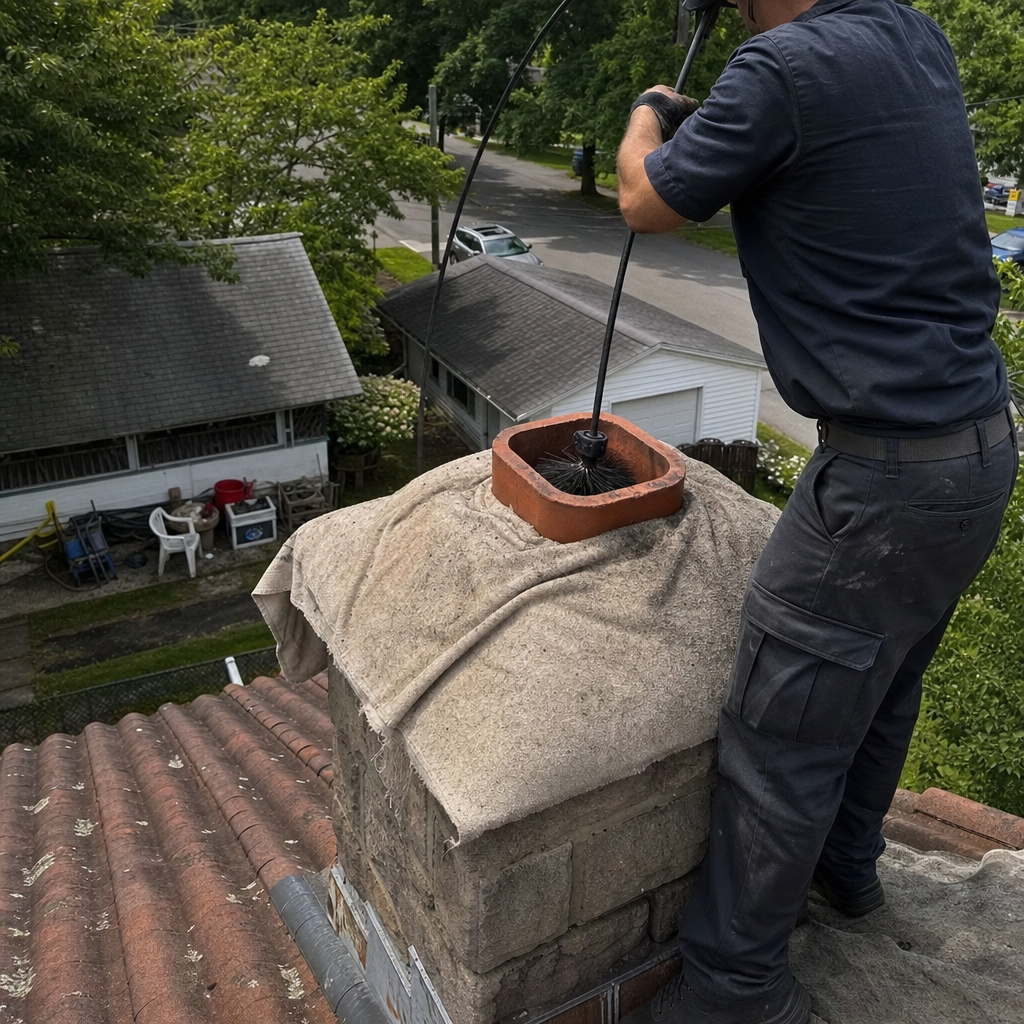
Signs Your Chimney Needs Cleaning in Rochester, NY — From Obvious Soot to the White Stains Most Homeowners Miss
The clearest signs your chimney needs cleaning are a smoky fireplace, a slow or weak draft, visible black creosote buildup above the damper, and a persistent campfire smell in your living space even when the fireplace isn’t in use. In Rochester’s older housing stock, you should also watch for white chalky streaks on exterior brick (efflorescence), yellow-orange discoloration around gas flue openings, and small clay tile fragments in the firebox — each pointing to problems that go far beyond a routine sweep. If you’re seeing any of these, call Premier Chimney Cleaning Greater Rochester at (888) 399-5696 for a free, no-pressure assessment.
Rochester sits directly in the bull’s-eye of Lake Ontario’s lake-effect snow machine, receiving 90–100+ inches of wet, dense snow annually that saturates chimney crowns, mortar joints, and flashing — then repeatedly freezes and thaws as lake proximity keeps temperatures hovering near 32°F throughout winter. This cycle actively demolishes masonry faster than in almost any comparable northeastern city, meaning every chimney cleaning visit here must double as a mortar-and-crown integrity inspection, not just an affordable chimney cleaning and sweep. Anthony Perez, our owner and lead technician, has spent 20 years climbing these stacks across South Wedge, Corn Hill, and the 19th Ward, and he’s learned that Rochester chimneys tell a different story than the generic warning lists suggest.
The Easy Signs Everyone Lists — And Why They’re Only Half the Picture
Smoke backing up into your room. A fire that struggles to draw. Black, tarry creosote you can scrape with a finger above the damper plate. These are real, legitimate warnings, and if you’re experiencing them, your chimney needs attention — no question. But here’s the thing: by the time these symptoms show up, you’ve already got a measurable creosote problem. In 20 years of chimneys, we’ve found that Rochester homeowners who wait for the obvious signs are often facing a more expensive visit than those who learn the quieter, earlier warnings.
The standard checklist matters, so let’s run through it quickly and honestly:
- Smoke in the living space — Usually means restricted airflow from creosote buildup, a blocked flue, or damper malfunction
- Slow draft or hard-to-start fires — Often creosote narrowing the flue, but in Rochester’s older homes can also indicate an improperly sized flue for the appliance
- Visible black buildup at the damper or smoke chamber — Stage 2 or 3 creosote; needs professional removal, not DIY brushing
- Strong smoky odor when the fireplace isn’t in use — Creosote absorbing humidity and off-gassing; worse in Rochester’s damp shoulder seasons
- Animals or debris sounds in the flue — Common after summer; nests and leaf buildup are genuine fire hazards
These are the signs you’ll find on every home improvement blog. They’re accurate. They’re also incomplete for Rochester. The next section covers what we actually find on jobs that changes the scope from a simple Chimney Cleaning & Sweep to a full structural assessment.
The Rochester-Specific Signs Anthony Finds That Generic Lists Miss
White Chalky Stains on Your Brick Face? That’s Efflorescence — And It’s a Warning
If you see white streaks running down your chimney’s exterior after winter, that’s not weathering or age — that’s efflorescence, and in Rochester it means water has been moving through your mortar joints all season. Lake Ontario’s wet, heavy snow holds moisture against masonry for days after storms, and those freeze-thaw cycles near 32°F drive water deep into the brick. When it evaporates, dissolved mineral salts deposit on the surface as that chalky white residue.
Anthony sees this every spring across South Wedge and Corn Hill, where the late-1800s to early-1930s brick construction dominates. The efflorescence itself isn’t dangerous, but it’s evidence of water infiltration that destroys mortar from the inside out. A chimney with active water movement needs more than a sweep — it needs crown assessment, flashing inspection, and often HeatShield liner restoration or masonry repair. We’ve had homeowners call for a “cleaning” and discover their stack is structurally compromised. Better to catch it at the efflorescence stage than after bricks start spalling.
Yellow or Orange Staining in a Gas Fireplace — Not Normal, Not Safe
Wood-burning chimneys get the attention, but Rochester’s converted two-family homes from the 1910s–1920s present a distinct gas-appliance warning. When a gas furnace or insert was swapped into a flue originally built for coal or wood, the oversized, unlined brick flue rarely got corrected. Anthony encounters this pattern constantly on the west and southwest sides: a gas appliance venting into bare brick, sometimes visibly open to the attic space.
The tell? Yellow or orange staining inside the firebox or around the flue opening. This indicates improper combustion or backdrafting — exhaust gases not drafting fully upward, instead condensing and discoloring surfaces. Carbon monoxide risk is real here, not theoretical. If you see this discoloration with a gas appliance, don’t wait for your annual sweep schedule. Call for an inspection.
Clay Tile Pieces in the Firebox — Your Liner Is Failing
Small fragments of terracotta-colored clay in your firebox aren’t debris from the last fire. They’re pieces of your flue liner, deteriorating and falling. In Rochester’s pre-liner-standard housing stock — which is most of the city built before the 1940s — original chimneys were bare brick. Clay tile liners were retrofitted later, often poorly, and they’ve now served 50–80 years.
This finding changes every visit. A cleaning appointment becomes a liner assessment: Is the tile cracked? Is it shifted? Is there exposed brick behind it? We use Olympia Chimney and DuraFlex stainless steel liners and HeatShield cerfractory resurfacing systems when the damage is localized, but the first step is honest diagnosis. Anthony’s approach: “I’m not here to sell you a new liner — I’m here to tell you what’s actually going on up there.” Sometimes it’s a partial repair; sometimes the whole liner needs replacement. Either way, clay fragments mean the clock is running.
The Musty Fireplace Smell in 1920s Housing — It’s Not a Smell Problem
Here’s a pattern from 20 years on Rochester roofs: a homeowner in a 1920s two-family says their house smells like fireplace even when there’s no fire. They’ve tried air fresheners, checked the damper, maybe had the ducts cleaned. The real source? Exhaust from an unlined or deteriorated flue venting laterally through compromised mortar into wall cavities and attic space.
This isn’t a cleaning issue in the traditional sense. It’s a containment failure — combustion gases, including carbon monoxide, finding paths through degraded masonry rather than exiting the flue. The “musty” or “smoky” odor is your warning. In Rochester’s dense older neighborhoods, this lateral leakage is more common than flue blockages because the original construction simply wasn’t designed for modern appliance loads. Every cleaning visit we perform includes visual inspection for this pattern, because the fix isn’t more sweeping — it’s structural sealing or relining.
How Rochester’s Climate Accelerates Every Chimney Problem
Lake Ontario’s moderating effect keeps Rochester temperatures oscillating near freezing for weeks at a time, producing an unusually high annual count of freeze-thaw cycles. Each cycle, water trapped in mortar joints expands about 9%, cracking and pulverizing the surrounding material. The wet, heavy character of lake-effect snow — distinct from drier inland snow — compounds this by holding moisture against masonry long after storms end.
What this means for homeowners: a chimney that might last 30 years in Syracuse or Buffalo can show serious deterioration in 15–20 years in Rochester. The climate doesn’t just cause problems; it accelerates them past the point where routine maintenance alone suffices. That’s why Anthony’s inspections always include crown, cap, and flashing condition — not as an upsell, but as standard practice. We’ve replaced Gelco chimney caps on homes where the cap itself was fine but the crown beneath it had cracked from freeze-thaw, allowing water to bypass the cap entirely.
What Does a Chimney Cleaning and Assessment Cost in Rochester?
Pricing depends on what we find, but here’s what Rochester homeowners typically pay for chimney services:
| Service | Typical Range | What Affects Cost |
|---|---|---|
| Level 1 cleaning & inspection | $175 – $275 | Accessibility, roof pitch, creosote stage |
| Level 2 video inspection | $250 – $400 | Required for real estate transactions or after chimney fire/earthquake |
| Stage 3 glazed creosote removal | $300 – $500 | Chemical treatment cycles, mechanical removal time |
| Chimney cap replacement (Gelco/Olympia) | $350 – $650 | Size, material (galvanized vs. stainless), installation complexity |
| Crown repair/sealing | $400 – $900 | Extent of cracking, need for full rebuild vs. resurfacing |
| HeatShield liner restoration | $1,200 – $2,500 | Flue length, number of flues, extent of damage |
| Stainless steel liner installation (DuraFlex) | $2,500 – $5,000 | Flue diameter, height, number of appliances served |
These are Rochester-market ranges based on our 20 years of quoting jobs here — not national averages that don’t account for our older housing stock and access challenges. We provide upfront pricing before any work begins, and estimates are always free. Call (888) 399-5696 for an exact quote on your specific chimney.
When to Call — And When It’s Urgent
Some signs mean schedule a cleaning within the season. Others mean don’t burn another fire until a professional looks at it.
Schedule soon (within 2–4 weeks): Slow draft, mild smoke odor, visible creosote, routine annual maintenance overdue. These are maintenance items — important, but not emergencies if you stop using the fireplace.
Call immediately — do not use the fireplace: Smoke filling the room during normal use, carbon monoxide detector activation, visible flame or sparking in the flue (chimney fire), clay tile fragments in the firebox, or yellow-orange staining with a gas appliance. These indicate active safety hazards.
The in-between cases: Efflorescence, minor crown cracking, or musty odors in older homes. These aren’t immediate emergencies, but they’re progressive. Water and gas leaks don’t self-heal. In Rochester’s climate, a small crown crack in October becomes a spalled brick face by April. We recommend addressing these before the next heating season.
Nearly 700 homeowners have trusted us with their chimney systems, and our 4.7-star average across 708 verified reviews reflects one thing: we tell you exactly what your chimney needs and nothing more. Anthony shows up on your job — not a rotating crew, not a subcontractor. That’s the owner-as-technician difference.
FAQs
The best chimney cleaning and sweep in Rochester typically runs $175–$275 for a standard Level 1 service, with Stage 3 glazed creosote removal ranging $300–$500 if chemical treatment is needed. Older homes in neighborhoods like South Wedge or the 19th Ward sometimes require additional access time due to roof pitch or proximity to neighboring structures. Call (888) 399-5696 for an exact quote — estimates are free.
HeatShield cerfractory resurfacing is usually more affordable than full stainless steel liner replacement for localized damage — typically $1,200–$2,500 versus $2,500–$5,000 for DuraFlex installation — but it only works when the existing clay tile is structurally sound beneath the damage. Anthony assesses this with a video inspection; if the tile is shifted, cracked through, or missing sections, replacement is the only safe option. We don’t recommend partial fixes for flue systems.
We prioritize urgent safety calls — smoke backing up, suspected chimney fire, or carbon monoxide concerns — and aim for same-day or next-day response for Rochester homeowners. For standard cleanings, we typically schedule within 3–7 days during peak season (September–November) and within 1–3 days in off-peak months. Call (888) 399-5696 and we’ll triage your situation honestly.
The National Fire Protection Association recommends annual inspection for all chimney systems, with cleaning frequency based on use and fuel type. In Rochester specifically, Anthony recommends annual cleaning for wood-burning fireplaces used regularly — our wet climate produces more acidic condensation and faster creosote buildup than drier regions. Gas appliances venting into older unlined flues should be inspected annually for deterioration, even though they don’t produce creosote. Think of it like an oil change: the interval depends on how hard you run the system.
Ready for an Honest Assessment?
If you’re seeing white stains, smelling smoke when there’s no fire, or just realizing it’s been a few years since anyone looked up your flue, Premier Chimney Cleaning Greater Rochester offers a no-pressure assessment in Rochester — call (888) 399-5696. Anthony will show up, climb your roof, and tell you exactly what’s going on up there.
Written by Anthony Perez, Owner & Lead Technician at Premier Chimney Cleaning Greater Rochester, serving Rochester, NY.