
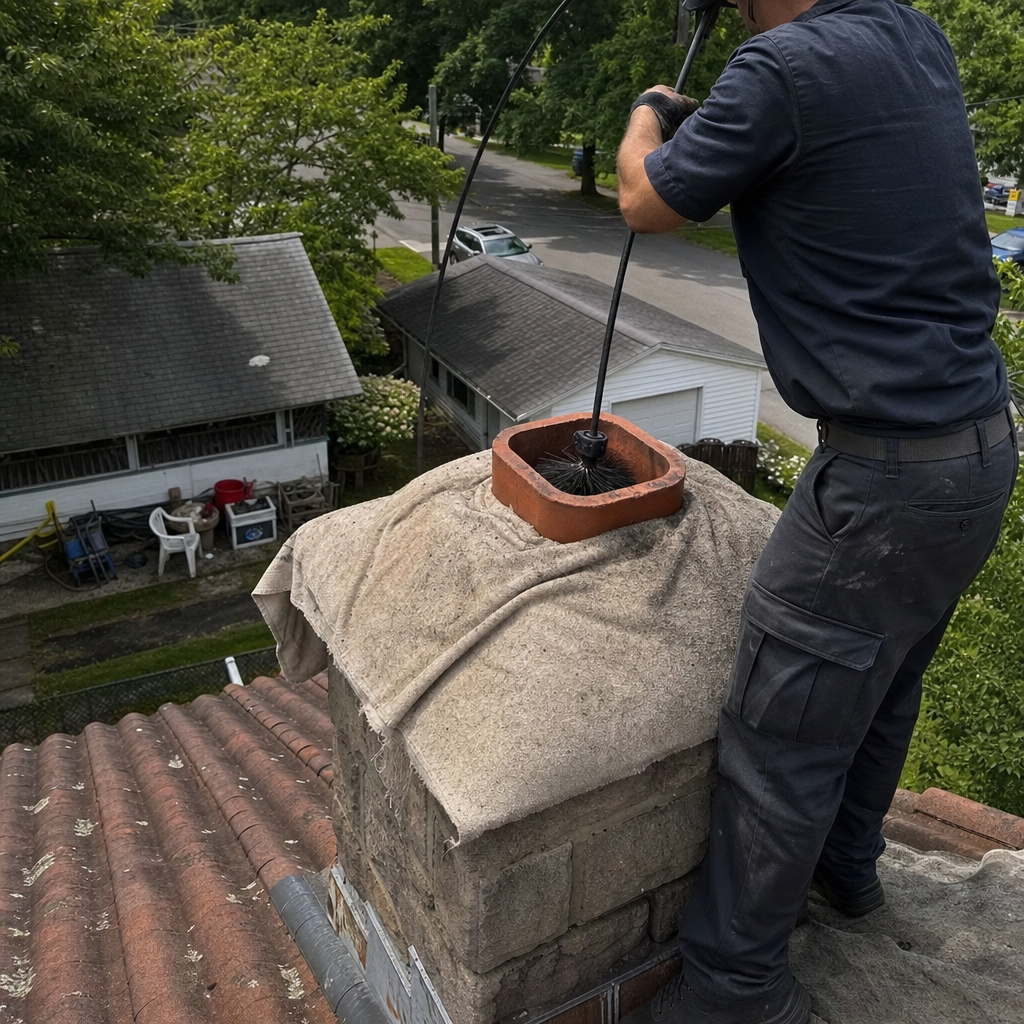
What Is Creosote Buildup? Rochester’s Cold Chimneys Make It Worse Than Most Guides Admit
Creosote buildup is condensed wood smoke that coats the inside of your chimney flue, progressing through three stages from dusty soot to glazed, highly flammable tar. In Rochester, this buildup accelerates faster than national averages because our extended cold winters and oversized, unlined coal-era flues cause exhaust gases to cool and condense before they escape the stack. If you’re noticing weak draft, smoky fires, or a tar-like odor from your fireplace, creosote is likely the culprit — and in this climate, it doesn’t stay “stage one” for long. Call Premier Chimney Cleaning Greater Rochester at (888) 399-5696 for an honest assessment.
Why Rochester Chimneys Accumulate Creosote Faster Than Drier Climates
Most creosote explainers stop at “burn dry wood and get an annual sweep.” That advice isn’t wrong, but it misses why Rochester homeowners routinely call us with stage-two and stage-three buildup that advanced faster than they expected.
Here’s the mechanism: creosote forms when wood smoke cools below its condensation point before exiting the chimney. The colder your flue walls, the more creosote deposits per cord burned. Rochester’s combination of factors creates uniquely cold flue conditions:
- Lake Ontario’s moderating effect keeps temperatures oscillating near freezing for weeks, meaning your chimney’s exterior brick never fully warms through winter, continuously chilling the flue gases inside
- Oversized coal-era flues common in South Wedge, 19th Ward, Corn Hill, and Maplewood homes slow exhaust velocity dramatically — smoke that should exit in seconds lingers for minutes, cooling further
- Many of these original flues were never lined when converted from coal to wood or gas, so hot gases contact bare brick that bleeds heat into cold exterior walls
- Wet, heavy lake-effect snow saturates masonry and drives freeze-thaw damage, degrading mortar joints that already leak combustion air and destabilize draft
Anthony Perez, Owner & Lead Technician at Premier Chimney Cleaning Greater Rochester, grew up in North Winton Village watching his father heat their home with a wood stove and learned the value of Affordable Chimney Cleaning & Sweep in Rochester, NY. He learned early that Rochester’s old housing stock and brutal winters demand more than textbook maintenance schedules. After 20 years of climbing these exact chimneys — from Greek Revival stacks in Corn Hill to the double-duty brick flues in 1920s two-families on the west side — he’s seen the pattern repeat: homeowners who “just got it swept two years ago” facing glazed buildup that should have taken five years to develop.
“I’m not here to sell you a new liner — I’m here to tell you what’s actually going on up there,” Anthony tells homeowners on every inspection. In Rochester, what’s going on is often an unlined 8×12-inch flue built for a coal furnace now struggling to vent a modern wood stove insert, with cold brick walls turning every fire into a creosote factory.
The Three Stages of Creosote: What Rochester Homeowners Actually Find
Understanding the stages matters because each requires different removal methods — and stage three in a Rochester chimney is not a DIY situation.
Stage One: Dusty, Powdery Soot
Stage one creosote looks like fine black dust or flakes that brush off easily with standard chimney sweep tools. This is what you want to find during an annual Chimney Cleaning & Sweep in Rochester. It forms when wood burns hot and dry with adequate airflow, and the flue gases stay hot enough to exit before condensing. Even in Rochester’s climate, proper burning practices and a well-sized liner can keep creosote at this manageable stage.
Stage Two: Flaky, Tar-Like Buildup
Stage two shifts to crunchy, porous flakes or sticky tar-like deposits that cling to flue walls. Standard brushes struggle here — the material has begun to harden and absorb into porous surfaces. This is where Rochester’s conditions push many homeowners faster than expected: that oversized, unlined flue in your 1910 Park Avenue duplex cools the gases just enough to skip past stage one within a single burning season. Anthony regularly finds stage-two buildup in chimneys that were “fine last year,” especially when homeowners burn weekend fires without letting the flue preheat properly.
Stage Three: Glazed, Hardened, Highly Flammable
Stage three creosote is a glossy, rock-hard, nearly glassy coating that seals to flue walls like enamel. It cannot be removed with mechanical brushing alone — attempting to chip it out damages clay tiles and bare brick. Chemical treatments with specialized products like those from Copperfield or HeatShield’s restoration line are required to soften and break down the glaze over multiple applications, followed by a follow-up sweep.
Anthony has seen the aftermath of stage-three ignition in Rochester homes. He’s not describing it to frighten anyone into a sweep — he’s describing it because understanding what happens helps homeowners recognize why delaying isn’t saving money. When glazed creosote ignites, it burns at temperatures exceeding 2,000°F, creating a chimney fire that sounds like a freight train and can crack clay liners, warp stainless steel, or penetrate through to surrounding framing. The Rochester Fire Department responds to these calls every winter, often in homes where the homeowner “didn’t think it was that bad.”
How Rochester’s Housing Stock Makes the Problem Harder to Prevent
The generic advice — “burn dry wood, hot fires, annual sweep” — assumes a reasonably modern chimney system. Much of Rochester’s housing stock fails that assumption.
In the two-family homes packed across the city’s west and southwest sides, built 1910–1930, a single brick stack commonly served both a basement coal furnace and a living-room fireplace. When those furnaces converted to gas, the oversized flue was rarely corrected. Anthony routinely finds active gas appliances venting into bare brick flues still open to the attic — a genuine carbon monoxide pathway that no amount of “proper burning” will fix.
These original unlined or single-wythe masonry chimneys, dense in neighborhoods like Swillburg and the 19th Ward, were built before clay tile liner standards existed. Later wood stove retrofits often jammed a connector pipe into a flue three times the necessary diameter, killing draft velocity and guaranteeing creosote condensation. The fix isn’t more aggressive sweeping — it’s proper relining with correctly sized materials like DuraFlex stainless steel or Olympia Chimney’s liner systems, sized to the appliance’s output.
We use Gelco and Famco components for caps and termination fittings because their stainless hardware withstands Rochester’s freeze-thaw punishment without the rust-through Anthony sees on big-box store caps within three seasons. A proper cap keeps that wet lake-effect snow out of the flue, which matters more here than in drier inland climates where snow slides off and stays dry.
What Creosote Buildup Actually Costs to Address in Rochester
Costs vary by stage, accessibility, and whether your flue needs correction beyond cleaning. Here’s what Chimney Cleaning Cost in Rochester, NY homeowners typically invest:
| Service | Typical Range | Notes |
|---|---|---|
| Standard chimney sweep (stage one) | $180–$280 | Annual maintenance; includes basic inspection |
| Heavy creosote removal (stage two) | $280–$450 | Requires rotary or powered sweeping equipment |
| Stage-three glazed creosote treatment | $450–$750+ | Chemical application plus follow-up sweep; may require multiple visits |
| Stainless steel liner installation (corrective) | $2,800–$5,500 | For unlined/oversized flues; restores proper draft and safety |
These ranges reflect Rochester’s market — labor costs, masonry condition, and the prevalence of difficult-access historic chimneys. Anthony provides exact quotes after visual inspection, not ballpark figures over the phone that change on arrival. Nearly 700 homeowners have trusted us with these assessments, reflected in our 4.7-star average across 708 verified reviews.
The real cost comparison isn’t sweep versus no-sweep — it’s scheduled maintenance versus emergency response after a chimney fire cracks your liner and requires full rebuilding. We’ve performed complete masonry rebuilds in Corn Hill and South Wedge where stage-three buildup and freeze-thaw damage combined to make the stack unsalvageable. Those projects run $8,000–$15,000. A $220 annual sweep is the bargain.
What Homeowners Can Check — and What Requires Anthony on the Ladder
We’re not going to pretend you need a technician to tell if your fire is smoky. You can observe meaningful signals yourself:
- Smoke entering the room during startup — indicates poor draft, often from cold flue or blockage
- Black, shiny deposits visible at the firebox or damper — stage two or three may already exist above
- Tar-like odor when the fireplace isn’t in use — warm weather releases volatiles from accumulated creosote
- Reduced heat output from the same wood load — creosote buildup restricts airflow and combustion efficiency
What you cannot assess from the hearth: the actual thickness and stage of buildup throughout the flue length, structural integrity of clay tiles or bare brick, proper liner sizing for your appliance, or carbon monoxide pathways through deteriorated mortar. Anthony uses professional-grade cameras to document conditions and shows homeowners exactly what the scan reveals — no interpretation required.
We’re state-licensed, insured & bonded, and we’ve been doing this in Rochester since before many competitors opened. When Anthony says a flue needs attention, it’s because the camera footage shows it, not because there’s a quota to hit.
FAQs
Faster than drier, warmer climates — Rochester’s cold winters and common unlined, oversized flues can produce stage-two buildup in a single season of weekend burning, where a properly lined system in a milder climate might stay at stage one for two to three years. Lake Ontario’s proximity keeps chimney exteriors cold, accelerating condensation. If you’re burning regularly without annual inspection, you’re likely further along than generic timelines suggest. Call (888) 399-5696 for a camera inspection that shows exactly where you stand.
Stage one, possibly — if you have proper rods, the right brush diameter for your flue, safe roof access, and know how to inspect for damage without dislodging tiles. Stage two and stage three require powered equipment and chemical treatments that most homeowners don’t have; more critically, DIY removal on a deteriorated flue can crack tiles or miss hidden damage that a professional camera inspection would catch. Given Rochester’s prevalence of century-old, unlined chimneys, we recommend professional assessment before any DIY attempt on unknown flue conditions. We offer free estimates — there’s no charge to learn what you’re dealing with.
No — stage-three glazed creosote requires chemical treatment to soften the hardened deposits, followed by a separate sweep visit after the product has worked. Any sweep promising complete glazed removal in a single visit is either using methods that damage your flue or leaving significant buildup behind. Anthony schedules the treatment, confirms softening with a follow-up camera check, then completes mechanical removal. It’s more visits than a standard sweep, but it’s the only approach that actually solves the problem without destroying your liner.
Natural gas produces minimal creosote compared to wood — the combustion is cleaner and more complete. However, Rochester’s common scenario of gas appliances vented into unlined, oversized coal-era flues creates different problems: acidic condensation from cooler gas exhaust deteriorates mortar, and the poor draft can spill carbon monoxide into living spaces. If your home has a converted flue in neighborhoods like the 19th Ward or Maplewood, the “no creosote” comfort may mask a more serious venting issue. We inspect gas-venting flues with the same thoroughness as wood-burning systems.
When to Schedule Inspection — and What to Expect
The National Fire Protection Association recommends annual chimney inspection for all solid-fuel systems. In Rochester, we’d push that to “before you light the first fire each season” — our freeze-thaw cycle doesn’t wait for calendar convenience, and creosote left from last spring has had all summer to harden in place.
Anthony arrives as both owner and lead technician, with 20 years of pattern recognition from thousands of Rochester chimneys. He’ll run a camera, explain what he sees in plain language, and tell you whether you’re looking at standard maintenance, stage-two intervention, or corrective relining. No upsell on what you don’t need. No dismissal of what you do.
If you’d rather have it looked at, Premier Chimney Cleaning Greater Rochester offers Best Chimney Cleaning & Sweep in Rochester, NY with a no-pressure assessment — call (888) 399-5696.
Written by Anthony Perez, Owner & Lead Technician at Premier Chimney Cleaning Greater Rochester, serving Rochester, NY.