
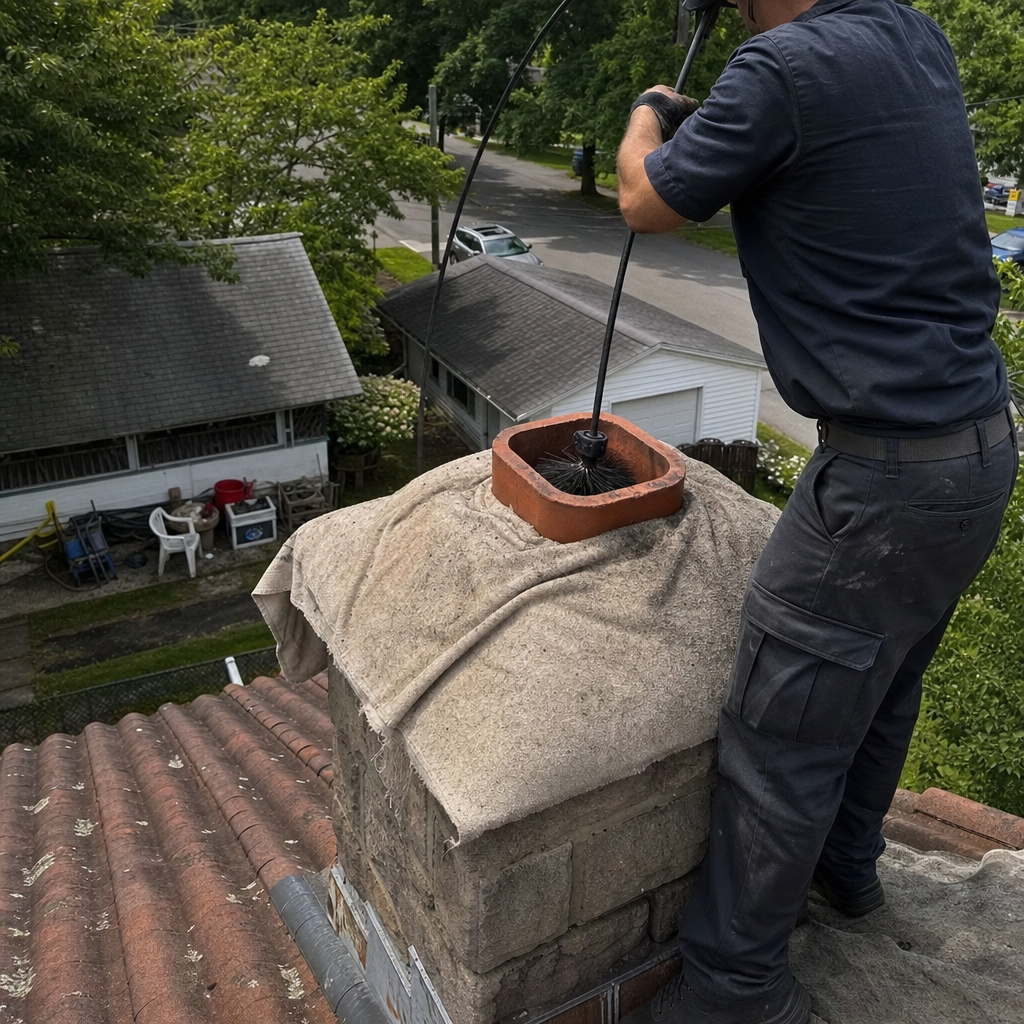
How Often Should You Clean Your Chimney in Rochester, NY? It Depends on What’s Burning Inside It
Most chimneys in Rochester need professional cleaning and inspection once per year at minimum. Wood-burning fireplaces used regularly during our heating season should be swept annually without exception, and heavy users often need twice-yearly service. Gas appliances in properly lined flues can sometimes stretch to an inspection-only annual visit with cleaning done only when debris or deterioration is found — but gas appliances venting into the unlined brick flues common in Rochester’s older neighborhoods need that same annual sweep and inspection as wood-burners, because the real enemy here isn’t creosote buildup — it’s lake-effect moisture destroying your masonry from the inside out. If you’re unsure what configuration you’re living with, call us at (888) 399-5696 and we’ll tell you exactly what schedule your chimney actually needs.
Why “Once a Year” Means Something Different in Rochester
The NFPA 211 standard says annual inspection and cleaning as needed. That’s sound guidance for a properly lined system in a moderate climate. Rochester isn’t moderate, and a surprising number of our chimneys aren’t properly lined.
Here’s the local reality Anthony Perez has confronted across two decades of climbing Rochester roofs: this city sits in the bull’s-eye of Lake Ontario’s lake-effect snow machine, soaking up 90–100-plus inches of wet, dense snow annually. That moisture saturates chimney crowns, mortar joints, and flashing — then repeatedly freezes and thaws as lake proximity keeps temperatures hovering near 32°F for weeks at a stretch. This cycle actively demolishes masonry faster than in almost any comparable northeastern city. Every chimney cleaning visit in Rochester must double as a mortar-and-crown integrity inspection, not merely a creosote sweep.
The moisture damage doesn’t wait for a convenient schedule. A hairline crack Anthony spots in your crown during a November cleaning can become a water channel funneling freeze-thaw destruction into your brickwork by March. That’s why our annual visits for Rochester homeowners aren’t calendar-box-checking exercises — they’re timed interventions against a climate that’s actively working on your chimney.
What Your Appliance Type Means for Cleaning Frequency
The “how often” question only makes sense once you know what your chimney is actually doing. We’ve built our Rochester service schedule around three distinct configurations we encounter daily:
- Wood-burning fireplace or stove in a lined flue: Annual sweep minimum, with the understanding that “annual” means before or during your heaviest burning period. If you’re running a Buck Stove or insert as primary heat in a drafty South Wedge Victorian, Anthony’s honest assessment after 20 years of chimneys is that twice a year — pre-season and mid-season — prevents stage-two creosote from becoming a problem. He’s not selling you an extra visit; he’s telling you what heavy use produces.
- Gas appliance in a properly lined flue: Annual inspection, with cleaning performed as needed. Gas burns cleaner than wood, but liner deterioration, debris from deteriorating masonry, or animal intrusion still occur. The inspection catches these; cleaning frequency follows what we find.
- Gas appliance in an unlined or improperly lined brick flue: Annual sweep and inspection, non-negotiable. This is the Rochester-specific problem. In the two-family homes from the 1910s–1920s packed across the city’s west and southwest sides, a single brick stack commonly served both a coal or wood basement furnace and a living-room fireplace. When those furnaces were swapped for gas equipment decades ago, the oversized, unlined flue was rarely corrected. We routinely find active gas appliances venting into bare brick flues that are visibly open to the attic. These systems need annual attention not for creosote but for condensation damage, mortar deterioration, and carbon monoxide pathway risks that a standard gas-only inspection won’t catch.
If you live in Corn Hill, Maplewood, 19th Ward, or Swillburg in a home built before 1940 and you don’t know your flue configuration, frequency is secondary. Knowing what you’re working with comes first. Anthony’s approach: “I’m not here to sell you a new liner — I’m here to tell you what’s actually going on up there.” We’ve used HeatShield cerfractory sealant and DuraFlex stainless relining systems to correct these retrofits properly when they’re needed, and we’ve also told homeowners their bare-brick flue is sound for continued use with proper monitoring. The assessment drives the recommendation, not the other way around.
The “I Barely Use It” Trap Rochester Homeowners Fall Into
Anthony hears this every fall: “We only light a few fires, do we really need it cleaned every year?” Or for gas: “The furnace runs, but the fireplace hasn’t been on in two years.”
Here’s what 20 years of Rochester chimneys has taught us. An unused chimney in our climate still cycles through 100-plus freeze-thaw events each winter. A crack that opens in November is a water channel by March, whether you’ve burned a single log or not. We’ve removed bird nests from flues that “weren’t being used,” found frost-shattered crown pieces blocking gas vents, and documented mortar joints so saturated they’ve turned to powder in chimneys the homeowner considered dormant.
The lake-effect snow that defines our winters isn’t the light, dry powder they get in the Adirondacks or Vermont. It’s wet, heavy, and it clings. It holds moisture against your masonry long after the storm ends, and that moisture finds every opening. Your chimney doesn’t care about your burn frequency — it cares about whether water is getting in and whether that water is freezing, expanding, and grinding your brickwork apart.
For gas systems, there’s another factor: modern high-efficiency appliances produce cooler exhaust that condenses more readily in oversized flues. That condensation is acidic. In an unlined Rochester-era brick flue, it’s slowly digesting your mortar from the inside while you assume “gas is clean, so I’m fine.” You’re not fine. You’re on a timeline, and the annual inspection is how we measure it.
What a Proper Cleaning Visit Actually Covers in Rochester
When Premier Chimney Cleaning arrives for your scheduled service, you’re getting Anthony Perez as your lead technician — not a rotating crew member working from a checklist. Our Chimney Cleaning & Sweep process for Rochester homes includes:
- Full visual and camera inspection of the flue interior, looking for creosote buildup, liner cracks, mortar loss, and glaze deposits
- Mechanical sweeping with professional-grade brushes sized to your flue diameter, with debris containment to protect your living space
- Crown, cap, and flashing examination for water intrusion points — critical in our freeze-thaw climate
- Damper and smoke chamber assessment for proper function and clearance
- Documentation of findings with honest recommendations: sweep only, repair needed, or monitor and re-check
We use Gelco stainless chimney caps and Olympia Chimney components where replacement is warranted, because professional-grade materials installed correctly outlast the commodity-grade alternatives by years in Rochester’s weather. A cap that fails in two seasons because it was thin aluminum from a big-box store isn’t saving you money — it’s costing you a second service call and potentially water damage in the interim.
Rochester Chimney Cleaning Costs: What to Expect
Pricing follows what we’re actually doing, not a flat rate that ignores your system’s condition. Here’s how our Rochester service pricing breaks down:
| Service | Typical Range | What Affects Cost |
|---|---|---|
| Standard chimney sweep and inspection (lined wood or gas flue, accessible roof) | $180 – $280 | Flue height, accessibility, amount of creosote or debris |
| Heavy creosote removal (stage-two glaze or significant buildup) | $280 – $400 | Chemical treatment cycles, mechanical removal time, safety precautions |
| Gas appliance in unlined flue — sweep plus full integrity assessment | $220 – $320 | Camera inspection depth, accessibility of connection points, documentation required |
| Chimney cap replacement (Gelco stainless, standard size) | $280 – $450 installed | Flue count, crown condition requiring repair before cap mounting |
| HeatShield liner restoration (where applicable) | $1,800 – $3,500 | Flue length, number of flues, extent of mortar joint repair needed |
We don’t quote over the phone for situations we haven’t seen. What we do guarantee: the price we quote after inspection is the price you pay, with no pressure to add services you don’t need. Nearly 700 homeowners across Greater Rochester have trusted us with this approach, reflected in our 4.7-star average across 708 verified reviews.
Key Takeaways for Rochester Homeowners
- Annual service is the floor for every chimney in Rochester, not the ceiling — our climate doesn’t forgive skipped years
- Wood-burning systems: sweep annually, with twice-yearly service for heavy users
- Gas in lined flues: inspect annually, clean as findings dictate
- Gas in unlined brick flues: sweep and inspect annually, with liner assessment every visit — this is the hidden Rochester problem
- Unused chimneys still need inspection; freeze-thaw damage progresses regardless of burn frequency
- Knowing your flue configuration matters more than any generic schedule — if you don’t know, we need to look
FAQs
A standard chimney sweep and inspection in Rochester typically runs $180 to $280 for a lined flue with normal accessibility and creosote levels. Heavy buildup, unlined flues requiring camera inspection, or difficult roof access push toward the $280 to $400 range. Call (888) 399-5696 for a free estimate — we’ll ask the right questions about your system to give you an accurate range before we arrive.
No — and in Rochester’s climate, that’s especially risky. An unused chimney still endures 100-plus freeze-thaw cycles each winter, and lake-effect moisture actively degrades mortar and crowns whether you’ve burned wood or not. We’ve found significant deterioration in chimneys that hadn’t seen a fire in years. The inspection catches what you can’t see from your living room.
Repair is often significantly less expensive when caught early. HeatShield cerfractory restoration can renew a clay tile liner with mortar joint loss or minor spalling for a fraction of full stainless relining — typically $1,800 to $3,500 versus $3,500 to $6,500-plus for complete DuraFlex stainless installation. The key is catching deterioration before it progresses to structural failure. Anthony’s 20 years of pattern recognition means we can tell you honestly which path makes sense for your specific flue condition.
We maintain same-day and next-day availability for suspected safety issues — blocked flues, carbon monoxide concerns, or visible damage after a storm. For routine scheduling during peak fall season (September through November), we recommend booking two to three weeks out. If you’re unsure whether your situation is urgent, call (888) 399-5696 and Anthony will talk through what you’re seeing to determine if immediate response is warranted.
When to Schedule Your Rochester Chimney Service
The ideal window for Rochester homeowners is August through October — before the heating season begins, when we can catch and correct summer’s moisture damage before you need the system. But “ideal” and “actual” don’t always align, and we’d rather see you in March than not at all. If you’re reading this in January and realizing it’s been two years, don’t defer another season. The freeze-thaw cycle doesn’t pause for your convenience.
Anthony Perez grew up in Rochester’s North Winton Village neighborhood, where houses are old, winters are long, and every third home has a fireplace that hasn’t been properly looked at in a decade. He learned the fundamentals of heating systems and building trades at Monroe Community College before spending years working chimneys hands-on across the Greater Rochester area — learning the rest the hard way, flue by flue. For over 20 years he’s run Premier Chimney Cleaning himself, showing up as both the owner and the guy on your roof. His father heated their house with a wood stove growing up, which is part of why Anthony takes carbon monoxide and creosote risks seriously in a way that feels personal, not just professional.
If you’d rather have it looked at than guess, Premier Chimney Cleaning Greater Rochester offers a no-pressure assessment — call (888) 399-5696 for a free estimate.
Written by Anthony Perez, Owner & Lead Technician at Premier Chimney Cleaning Greater Rochester, serving Rochester, NY.