
Quick Summary
Accumulating creosote inside wood-burning flues represents a primary cause of dangerous residential heating fires, making professional creosote removal services essential for safeguarding homes. Premier Chimney Cleaning Greater Rochester provides specialized, mess-free extraction using advanced chemical treatments and rotary equipment to safely eliminate dangerous stage 3 glazed creosote without damaging chimney liners. Readers will understand the stages of flue buildup and standard service costs, enabling them to schedule a professional chimney inspection or request a free written estimate from Premier Chimney Cleaning Greater Rochester.
Professional Creosote Removal Services
According to the U.S. Fire Administration, heating equipment is the second leading cause of residential building fires, accounting for an estimated 34,200 annual residential heating fires, 165 deaths, 600 injuries, and $367 million in annual property loss, with confined fires representing a 77% share. In addition, failure to clean was the leading contributing factor in home heating fires, accounting for 25% of fires during 2014 to 2018. The primary culprit inside wood-burning chimneys is creosote, a combustible byproduct of wood combustion that sticks to the interior walls of your flue. Left unchecked, creosote hardens, restricts airflow, and can ignite into a dangerous structural fire.[1]
The Connecticut Department of Consumer Protection warns that creosote buildup can ruin chimney liners and allow intense heat to reach combustible framing within home walls. Investing in professional creosote removal services, such as those from Premier Chimney Cleaning Greater Rochester, can help identify and reduce creosote-related fire hazards across Rochester homes.[3]
What Is Creosote and Why Is It Dangerous?
Creosote forms as a byproduct of wood combustion that accumulates along chimney flue walls. As layers build over time, the risk of a flue fire increases.[4]
While not an authoritative or standardized classification, the chimney service industry sometimes uses a nonstandard descriptive framework to categorize creosote buildup:
- Stage 1 (Soot and Ash): A light, flaky, or powdery deposit.
- Stage 2 (Porous Tar Flakes): Thicker, sticky, and tar-like deposits adhering to flue walls.
- Stage 3 (Glazed Creosote): A dense, hardened layer of tar that forms on the flue lining.
Why Glazed Creosote Needs Specialized Care
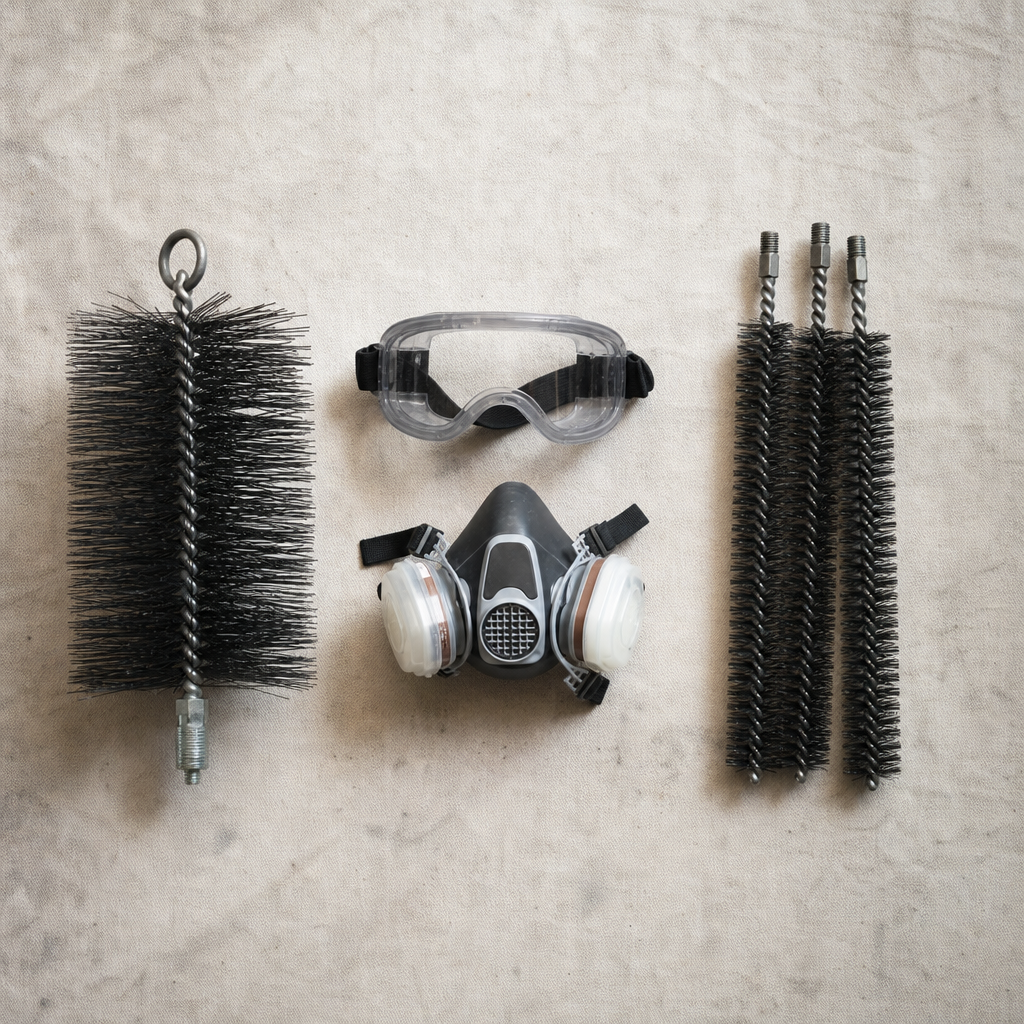
Glazed creosote is hardened buildup requiring professional creosote removal services, where technicians apply chemical treatments to neutralize glazed layers before using specialized mechanical rotary tools to safely clean chimney liners without causing structural damage.
How Much Does Professional Creosote Removal Cost?
According to industry insights from Premier Chimney Cleaning Greater Rochester, professional chimney cleaning generally ranges between approximately $129 and $381, with an average cost near $254. However, heavy buildup, chimney type, accessibility, and the need for additional specialized treatment may increase the price.
What to Expect During a Professional Chimney Service
A reputable chimney company like Premier Chimney Cleaning Greater Rochester protects your home interior while evaluating and cleaning the venting system.
During a typical professional service appointment, technicians will:
- Dust Containment: Use protective tarps and vacuums to control soot and debris around the fireplace opening.
- Flue Cleaning: Sweep and remove soot and creosote deposits from accessible areas of the venting system.
- Component Inspection: Evaluate visible components, including the liner, damper, and cap, for signs of wear, damage, or hazardous buildup.
Frequently Asked Questions
How often should creosote be professionally cleaned from a chimney?
The City of Portland advises having chimneys inspected by a qualified professional before each heating season and cleaned when necessary. Research-supported EPA guidance recommends at least an annual professional inspection and cleaning whenever buildup is present, while noting that cleaning frequency may need to increase with heavy use or rapid accumulation.[2]
Can I remove glazed creosote myself?
No. Glazed creosote is extremely combustible and dense, meaning it must be remediated through professional creosote removal services from Premier Chimney Cleaning Greater Rochester using advanced chemical modifiers and mechanical equipment.[5]
Need professional creosote removal services?
We’re available now — call for a fast, free estimate.
Sources
- Heating – usfa.fema.gov (2023)
- Heating Fires in Residential Buildings (2017-2019) – usfa.fema.gov (2019)
- Home Fires Involving Heating Equipment – bismarcknd.gov (2016)
- Heating Fires in Residential Buildings (2017-2019) – usfa.fema.gov (2019)
- [PDF] The Creosote Problem—Chimney Fires and Chimney Cleaning – archive.lib.msu.edu (2000)
Related reading: Professional Creosote Removal Rochester Ny | Call Now-10% Off | Same-Day Service | Free Estimate
Related reading: Chimney Sweep Cost Near Me – Call Now-10% Off – Same-Day Service – Free Estimate
Related reading: Chimney Fire Prevention | Call Now-10% Off | Same-Day Service | Free Estimate
Frequently Asked Questions
How long does a professional creosote removal service appointment typically take?
A standard professional chimney cleaning typically takes between 45 and 90 minutes. However, treating heavy Stage 3 glazed creosote may require additional time for specialized chemical applications and mechanical rotary scrubbing by Premier Chimney Cleaning Greater Rochester.
What firewood habits cause rapid creosote accumulation in chimney flues?
Burning unseasoned or wet wood, overloading the firebox, and keeping dampers overly restricted all lead to incomplete combustion and accelerated creosote buildup. Premier Chimney Cleaning Greater Rochester recommends burning only dry, seasoned hardwoods to keep flues cleaner between professional maintenance visits.
How do professional chimney sweeps prevent soot and creosote dust from entering the home?
Certified technicians from Premier Chimney Cleaning Greater Rochester establish a containment area using high-powered HEPA filtration vacuums, sealed hearth covers, and protective tarps. This specialized equipment ensures all loosened creosote and soot particles are completely captured without contaminating indoor living spaces.
About the author
 |
Sarah Miller Sarah Miller is a home safety specialist and certified chimney sweep with over 8 years of experience in the residential maintenance sector. Holding a BA in Communications from SUNY Brockport, she combines her technical knowledge of creosote removal and fire prevention with clear, actionable advice for homeowners. Her writing focuses on seasonal chimney care and emergency response protocols for Greater Rochester residents. |
Chimney overdue for a cleaning or inspection?
We’re available now — call for a fast, free estimate.
Call Now - Free Estimate